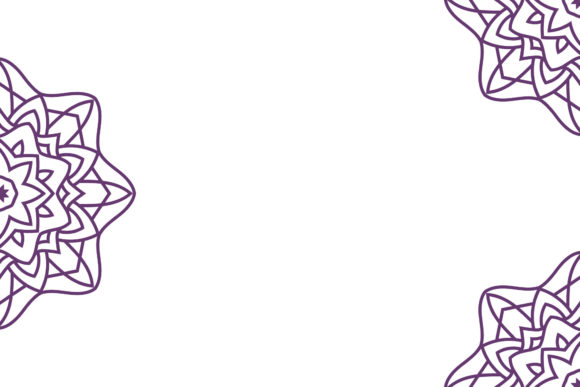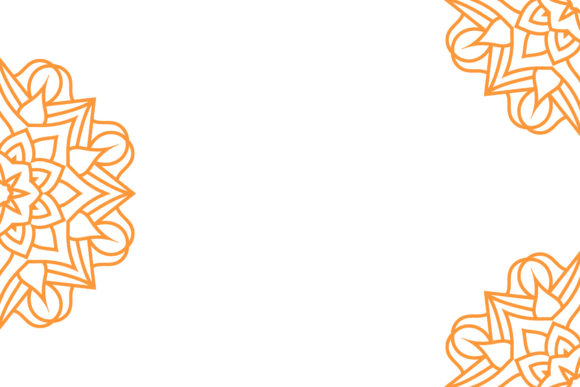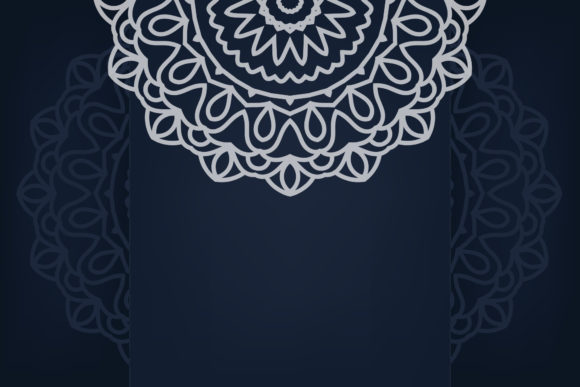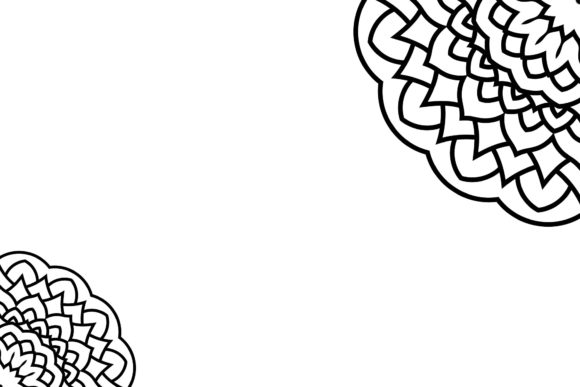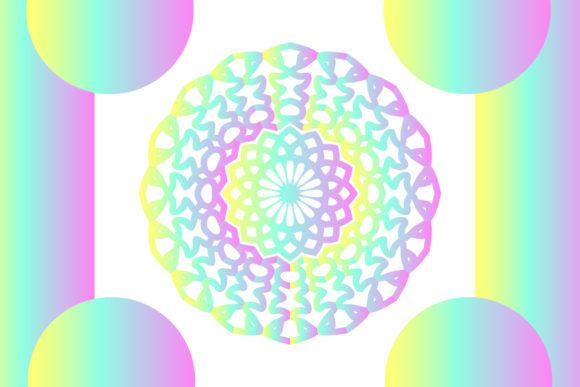
Mandala Line Floral Background Design
A Quiet, Flowing Presence—Not a Statement, But a Setting
First impression? This isn’t a bold monogram or a punchy slogan—it’s a breathing space. The Mandala Line Floral Background Design feels like ink drawn with slow breath: concentric circles softened by trailing vines and delicate blossoms, all rendered in clean, unbroken lines. There’s no heavy fill, no dense satin stitch clusters—just rhythm, repetition, and gentle symmetry. It doesn’t shout. It holds room. That makes it unusually versatile for embroidery—not as a focal point, but as the quiet foundation beneath something personal: a name, a date, a tiny bird motif, or even a single embroidered word.
Where It Truly Shines: Real Projects, Not Just Pixels
Last week, I prepped a custom linen tote bag for a local botanical apothecary—light beige fabric, medium weight, slightly textured. I layered the Mandala Line Floral Background Design at 7.5" wide behind a small hand-lettered “Wild & Rooted” script. Stitched with 40-weight matte cotton thread in soft sage, the result was grounded, intentional, and quietly luxurious. Customers paused to trace the pattern with their fingers—not because it was flashy, but because it felt *made*, not printed.
It works beautifully on sweatshirt cuffs (scaled down), pillow covers (centered with negative space), baby onesies (as a subtle chest accent), and tea towels (stitched along the hem). As a background for embroidered patches—especially those with central applique elements—it adds cohesion without competing. For Etsy sellers listing personalized gifts, this design helps unify collections: same mandala base, different monograms or seasonal motifs swapped in. It reads as thoughtful branding, not generic clip art.
Where Caution Is Required—Not Flaws, Just Fit
This isn’t a one-size-fits-all embroidery file. Its strength is its subtlety—and that becomes a limitation in certain contexts:
- Small hoop sizes (under 4”): Fine detail can blur; test stitch density first—some inner loops may collapse or vanish on tight curves.
- Stretchy or thin fabrics (like jersey or voile): Without proper cutaway stabilizer, those long flowing lines can pucker or shift. Not impossible—but demands extra prep.
- Dark or heavily textured fabrics: Since it’s a line-based design (not high-contrast fills), it relies on thread color and fabric tone. On charcoal fleece or burlap, use brighter or metallic thread to maintain legibility.
- Curved surfaces (caps, curved apron pockets): The outer ring integrity matters. If hooping distorts the circle, the mandala’s balance breaks. Test on scrap before committing.
- Frequent-wash items (baby blankets, kitchen towels): Running stitch lines hold up well—but avoid ultra-thin thread or low-density settings. Confirm stitch count isn’t so sparse it frays over time.
What It Adds to Your Finished Product—Beyond Aesthetics
When stitched thoughtfully, the Mandala Line Floral Background Design elevates perceived value. It signals care—not just “I embroidered something,” but “I considered how this lives in the world.” That builds customer trust, especially for handmade product buyers who scroll past mass-produced looks. For craft business owners, it supports brand consistency: imagine using the same mandala base across holiday ornaments, wedding napkin corners, and boutique shopping bags. Recognition grows quietly, without logos.
It also improves buyer engagement. On Etsy, listings with layered, intentional backgrounds (like this one) see longer dwell times—shoppers linger, imagining the item in their own space. And for digital product sellers offering printable mockups or editable templates, this design translates cleanly to PNG and SVG previews—no jagged edges, no muddy gradients.
Practical Embroidery Designer Notes—Before You Hoop It
- Always test on scrap fabric—same type, same stabilizer, same thread count you’ll use on the final piece.
- Check contrast early: View your thread + fabric combo in natural light *and* under indoor lighting. What reads softly by day may disappear at night.
- Review stitch density in your embroidery software. If the original file uses very light running stitch, consider adding a second pass or slight offset for durability—especially for commercial embroidery.
- Confirm hoop size compatibility. At full 1920×1280 px resolution, this scales generously—but verify your machine’s max stitch area before resizing downward too far.
- Inspect small details: Zoom in on petal tips and inner ring junctions. Do they stay sharp? Or do they become ambiguous blobs when stitched at 3–4”? Adjust if needed.
- Test black-and-white mockups. If you’re designing for both light and dark garments, ensure the line weight holds up without fill.
- Use appropriate stabilizer. Medium-weight cutaway for stable wovens; tear-away + topping for knits; water-soluble for delicate surfaces like silk.
- Verify licensing. This design is sold as a Graphics asset in Backgrounds category—confirm whether commercial use (selling finished embroidered items or digital bundles) is permitted under the shop’s terms.
Final Thought: A Design That Supports, Not Steals
The Mandala Line Floral Background Design won’t win awards for complexity—but it earns respect for restraint. In a market flooded with loud, trend-chasing embroidery files, it’s a reminder that sometimes the most effective design is the one that lets the person, the product, or the moment take center stage. Whether you’re stitching a baby’s first blanket, branding a small shop’s packaging, or building a cohesive digital product suite, this background doesn’t distract. It dignifies. And in handmade work, that kind of quiet confidence is rare—and deeply valuable.