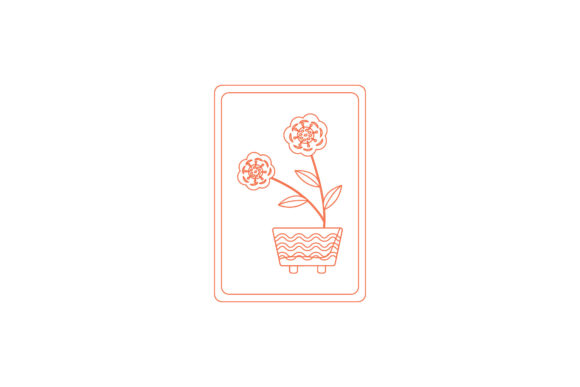
Flowers Floral Card Line Style
A Delicate Line, Not a Dense Bloom — What This Design Really Wants to Be
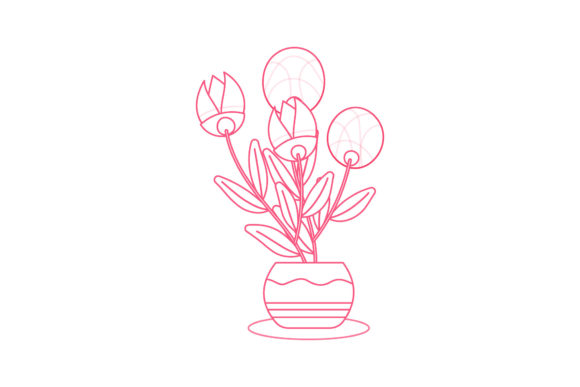
First glance at Flowers Floral Card Line Style feels like opening a vintage botanical greeting card: slender stems, unfurling petals drawn with quiet confidence, no fill, no shadow—just clean, continuous line work. It’s not bold. It’s not ornate. It’s *intentionally spare*. That simplicity is its strength—and its limitation. As an embroidery designer who’s stitched hundreds of floral motifs across baby onesies, boutique aprons, and Etsy patches, I immediately ask: “Where does this line breathe in thread?” Not every floral vector translates gracefully to needle and fabric. This one does—but only where subtlety is the goal.
Where It Shines: Light Touch, High Charm
I recently prepped a custom embroidered tote bag for a local florist’s pop-up—linen canvas, natural dye, minimalist branding. Flowers Floral Card Line Style landed perfectly on the lower corner: small (3.2" wide), single-color black thread, satin stitch outline only. No fill. No appliqué. Just that graceful, looping stem and three open blossoms. Customers paused. They traced the shape with their fingers. They called it “elegant but unstuffy.” That’s the sweet spot: personalized gifts, nursery decor, tea towels for a slow-living brand, or sweatshirt cuffs for a yoga studio. It works beautifully as a machine embroidery design on stable, medium-weight fabrics—cotton twill, quilting cotton, structured canvas—where stitch definition stays crisp and the line reads clearly at 2–4 inches wide.
Real-World Fit Across Your Projects
- Custom apparel: Ideal for sleeve hems, pocket corners, or back necklines—not full-chest placements. On a crewneck sweatshirt? Yes—if sized right and stabilized well. On a thin ribbed t-shirt? Risky without underlay and ultra-fine needles.
- Baby embroidery: A gentle choice for onesies or burp cloths—soft lines read as tender, not fussy. Avoid tight curves near seams where puckering hides detail.
- Embroidered patch: Works cleanly as a standalone motif on woven backing. The open shapes prevent dense stitch buildup, so patches lie flat and flex naturally.
- Holiday or wedding gift: Stitched in ivory thread on oatmeal linen napkins or pillow covers, it whispers tradition without cliché.
- Etsy seller or craft business: This is a strong digital embroidery file for bundling—pair it with monogram initials or simple borders. Its line style invites customization (add a name, adjust petal count) without heavy editing.
Where to Pause—And Why
This isn’t a workhorse design for high-contrast visibility or rugged use. Its delicate line loses clarity on dark fabric unless you use bright, matte thread (not rayon glare) and test density carefully. On textured fabrics—like bouclé knit or terry cloth—the line can visually “break” between loops, especially where stems taper to fine points. And on stretchy fabric? Only with cutaway stabilizer + basting + careful hooping—otherwise, those slender curves distort mid-stitch.
Curved surfaces—caps, beanies, curved pillow edges—require thoughtful placement. That long, unbroken stem? It’ll pull or gap if forced around a dome. Better to rotate or crop it slightly than risk distortion. Also: avoid tiny hoop sizes (<3"). The smallest blossom here needs breathing room—under 1.5", details blur into a single-thread whisper, not a defined shape.
What It Adds to Your Finished Product—Beyond Pretty
When executed well, Flowers Floral Card Line Style elevates perceived value through restraint. It signals thoughtfulness—not just decoration. For handmade product buyers, that translates to trust: “This wasn’t slapped on; it was chosen.” On a kitchen towel or apron, it reads as artisanal, not mass-produced. For boutique branding, it supports cohesion without shouting—especially alongside hand-lettered tags or earthy packaging. And because it’s vector-based, you can scale it for a large pillow cover mockup *and* resize it cleanly for a delicate baby headband—no pixelation, no redraw needed. That flexibility makes it solid design assets for creatives juggling multiple formats.
Your Embroidery Designer Checklist
- Test first—always. Stitch Flowers Floral Card Line Style on scrap fabric matching your final project’s weight and stretch.
- Check thread color contrast on both light and dark backgrounds—not just digitally, but in real light.
- Review stitch density. Even a line design can over-stitch if converted poorly. Look for smooth transitions, no overlapping runs.
- Confirm hoop size compatibility. Does your machine handle the longest stem comfortably? If not, consider cropping or rotating.
- Inspect small details at actual stitch-out size—especially petal tips and stem ends. Do they land cleanly, or fray visually?
- Try black-and-white mockups. If it reads strongly without color, it’ll hold up in varied lighting and fabric tones.
- Use appropriate stabilizer. Tear-away for stable wovens; cutaway for knits or anything that moves.
- Verify licensing before selling finished items or bundling as a digital embroidery file—especially for commercial embroidery or Etsy listings.
Final Thought: Less Is Truly More—If You Let It Be
Flowers Floral Card Line Style won’t dominate a garment. It won’t dazzle from across a craft fair aisle. But it will linger in memory—a quiet signature on a well-made tote, a soft accent on a newborn’s onesie, a refined note on a holiday gift tag. It belongs to makers who understand that embroidery isn’t always about coverage—it’s about intention. Use it where delicacy matters, where space speaks, and where your customer values craftsmanship over clutter. That’s where this line-style floral earns its place—not as filler, but as finish.