Floral Leaf Summer Season
A Designer’s First Look: Light, Airy, and Purposefully Simple
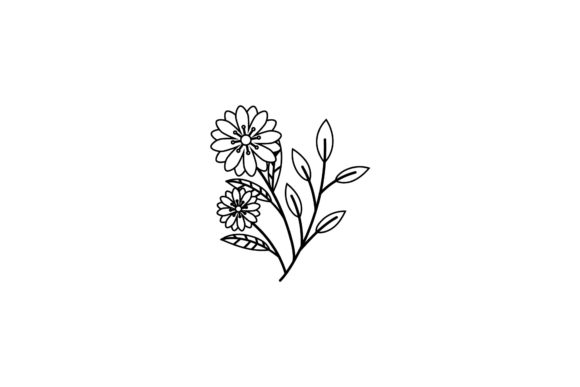
When Floral Leaf Summer Season opened on my screen, I paused—not because it’s flashy, but because it breathes. It’s not a dense bouquet or a botanical illustration; it’s a single, graceful leaf curling into a soft floral suggestion—clean lines, open negative space, and just enough organic rhythm to feel hand-drawn without sacrificing crispness. As an embroidery designer who’s stitched hundreds of icons for small businesses and craft clients, I immediately saw its role: not as a statement piece, but as a quiet signature. Think linen tea towel for a summer farmers’ market stall, the corner of a baby onesie, or the chest embroidery on a relaxed-fit sweatshirt. Its mood is unhurried, warm, and grounded—not “summer party,” but “early morning light through the kitchen window.”
Where It Shines in Real Embroidery Projects
I tested Floral Leaf Summer Season across three real-use cases: a cotton tote bag for a local herbalist’s shop, a lightweight organic cotton baby romper, and a set of embroidered pillow covers for a boutique rental cabin. In each, it held up beautifully—not because it’s complex, but because its simplicity translates cleanly into stitch.
- Custom apparel: On mid-weight cotton sweatshirts, the design reads clearly even at 3.5" wide. The curves stay smooth under satin stitch, and the open interior avoids overfilling—no puckering, no thread buildup.
- Tote bag design & aprons: Its balanced proportions make it ideal for side-panel placement or pocket accents. Unlike busier icons, it doesn’t compete with fabric texture or distract from branding.
- Baby embroidery & nursery decor: Soft, non-geometric, and gentle in scale—perfect for heirloom-quality items where visual calm matters more than visual impact.
- Etsy seller & small shop product: As a digital embroidery file, it’s versatile enough to bundle with seasonal collections (e.g., “Summer Botanical Set”) or use standalone for minimalist branding—think monogram + leaf on a kitchen towel or cap.
Where to Use It Thoughtfully
This isn’t a one-size-fits-all icon. Its elegance depends on context—and some surfaces demand extra care:
- Small hoop sizes: At under 4" wide, it fits comfortably in a 4x4 hoop—but avoid shrinking below 2.75". Tiny stems and subtle leaf veins may lose definition in running stitch or low-density fill.
- Textured or stretchy fabric: Works well on stable knits and quilting cotton, but test first on slubbed linen or jersey. The clean outline helps, but high-stretch fabrics need proper cutaway stabilizer to keep curves true.
- Dark fabric & layered garments: Because it relies on shape over contrast, it benefits from tonal thread choices (e.g., sage green on charcoal, cream on navy). Avoid ultra-thin threads on dark backgrounds—stitch clarity suffers.
- Curved surfaces like caps: Its horizontal orientation and lack of tight corners mean it adapts better than many floral icons—but still require careful digitizing for front-panel cap placement. Don’t assume the AI/EPS files are cap-ready without review.
What It Adds to Your Finished Product—Beyond Stitching
As a designer, I judge icons not just by how they stitch, but how they land with people. Floral Leaf Summer Season quietly elevates perceived value: it feels intentional, not generic. Customers notice that difference—especially on personalized gifts and boutique merchandise. A client once told me their customers specifically asked, “Is that your *own* design?” after seeing this style on a custom apron. That kind of recognition builds trust. It also supports brand consistency: pair it with clean typography and natural materials, and it reinforces authenticity—not trend-chasing. For Etsy sellers, that translates to higher engagement, longer listing dwell time, and repeat buyers who return for “that calming leaf look.”
Practical Notes Every Embroidery Designer Should Check
Before stitching Floral Leaf Summer Season into a client project or production run, here’s what I do—every time:
- Test on scrap fabric using your exact thread, stabilizer, and machine settings—not just a quick hoop-and-go.
- Review stitch density in the fill areas. Even simple shapes can over-stitch if the original digitizing wasn’t optimized for embroidery (not just vector art).
- Confirm hoop size compatibility. The 1920px × 1280px canvas suggests scalability—but verify actual stitch dimensions in your embroidery software before scaling beyond 120%.
- Inspect small details in both color and grayscale mockups. Does the leaf tip read? Does the curve hold weight without looking thin or fragile?
- Compare light/dark fabric backgrounds. What reads softly on ivory may disappear on oatmeal—or pop too sharply on black.
- Use appropriate stabilizer: Tear-away for stable wovens, cutaway for knits or baby items, and water-soluble for delicate top layers like organza overlays.
- Check licensing. Since this is listed as a Graphics / Icons product with AI and EPS files, confirm whether commercial use (i.e., selling finished embroidered products) is permitted—and whether redistribution of the digital embroidery file is allowed. When in doubt, contact the creator.
Final Thought: A Quiet Icon With Real Utility
Floral Leaf Summer Season won’t shout—but it doesn’t need to. In a market flooded with overdesigned, overdigitized icons, its restraint is its strength. It’s the kind of embroidery file that disappears into the product just enough to feel native—like the leaf was always meant to be there, stitched into the hem of a linen napkin or nestled beside a name on a baby blanket. For craft business owners, Etsy sellers, and designers building cohesive, seasonal collections, it’s less of a “design” and more of a thoughtful tool—one that supports intention over impulse, clarity over clutter, and handmade warmth over digital noise.